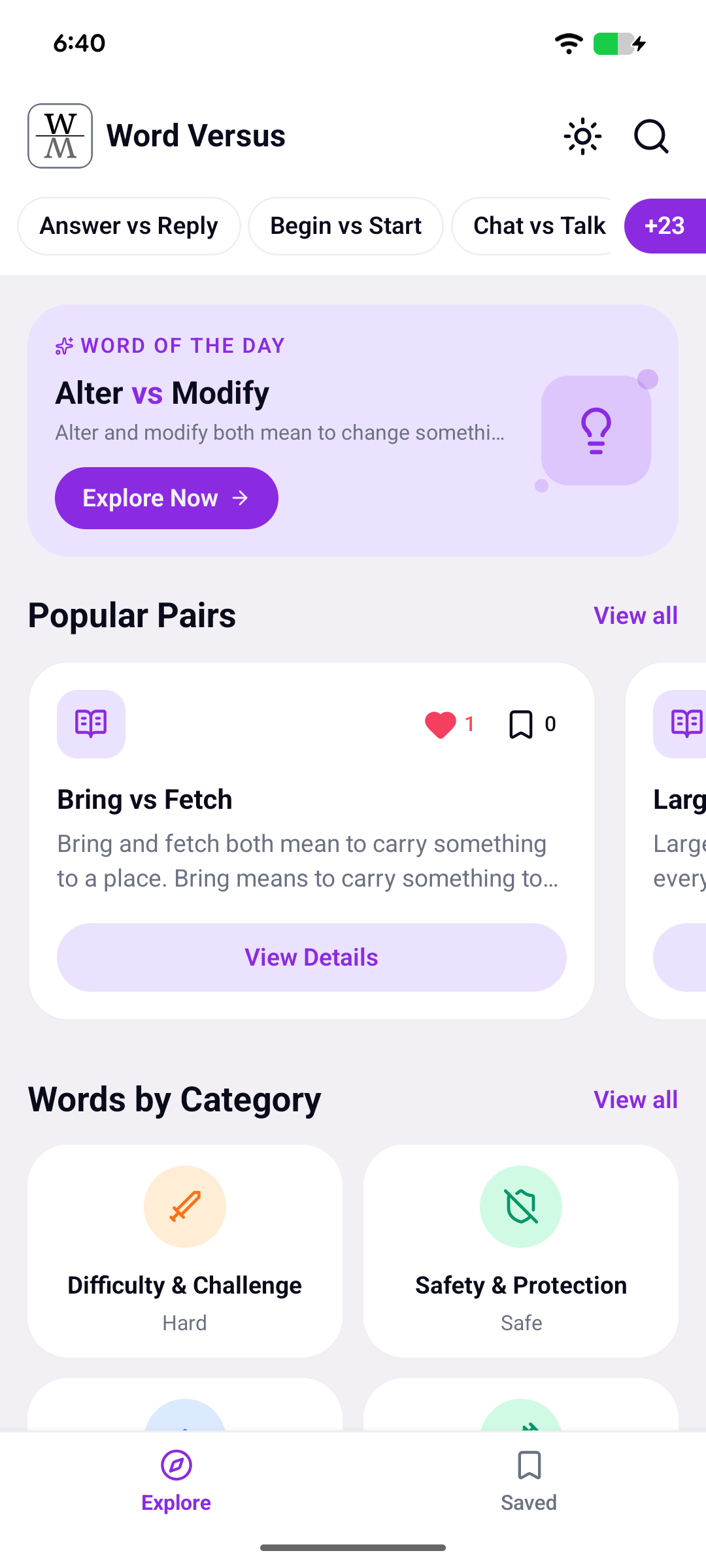
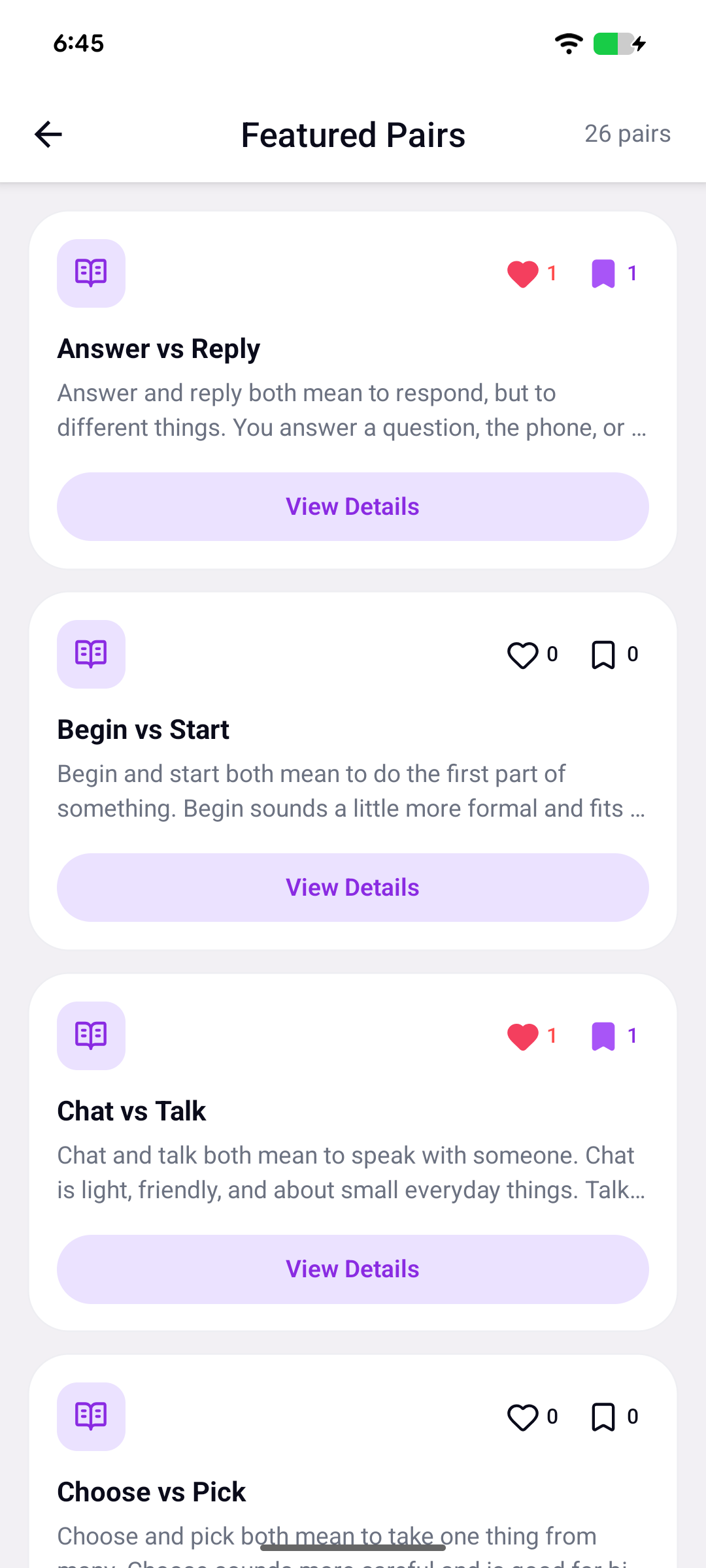
You write modify when you mean alter. You say begin when start was sharper. Each one is almost right — close enough that no one corrects you, but off enough that your meaning blurs.
The hardest part? You don't notice. These aren't mistakes you can look up, because you don't know to look. They're the words you almost know — and they're shaping how clearly you come across, every single day.
Sentence A
The changes will alter how the team shares information.
Sentence B
The changes will modify how the team shares information.
Three steps. A minute a day. Words you'll never confuse again.
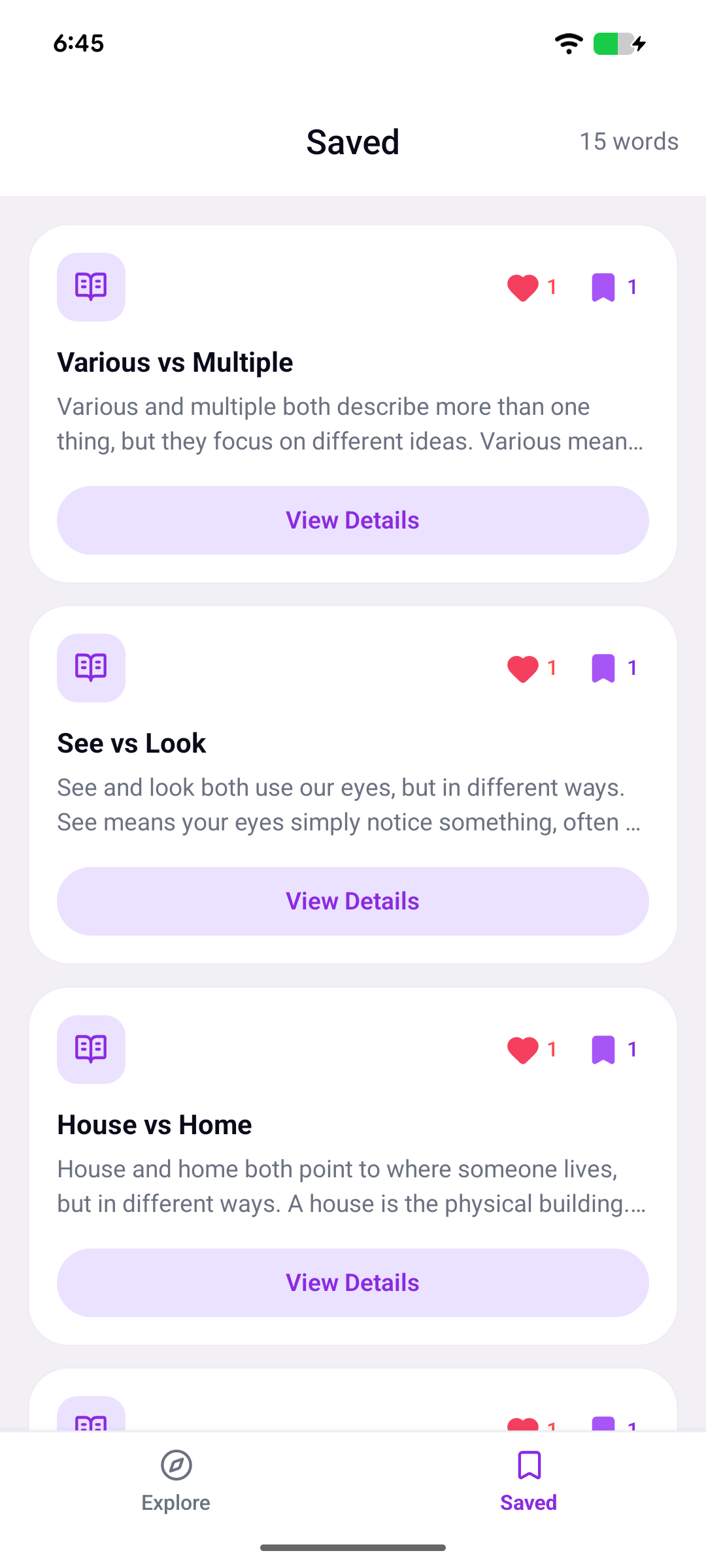
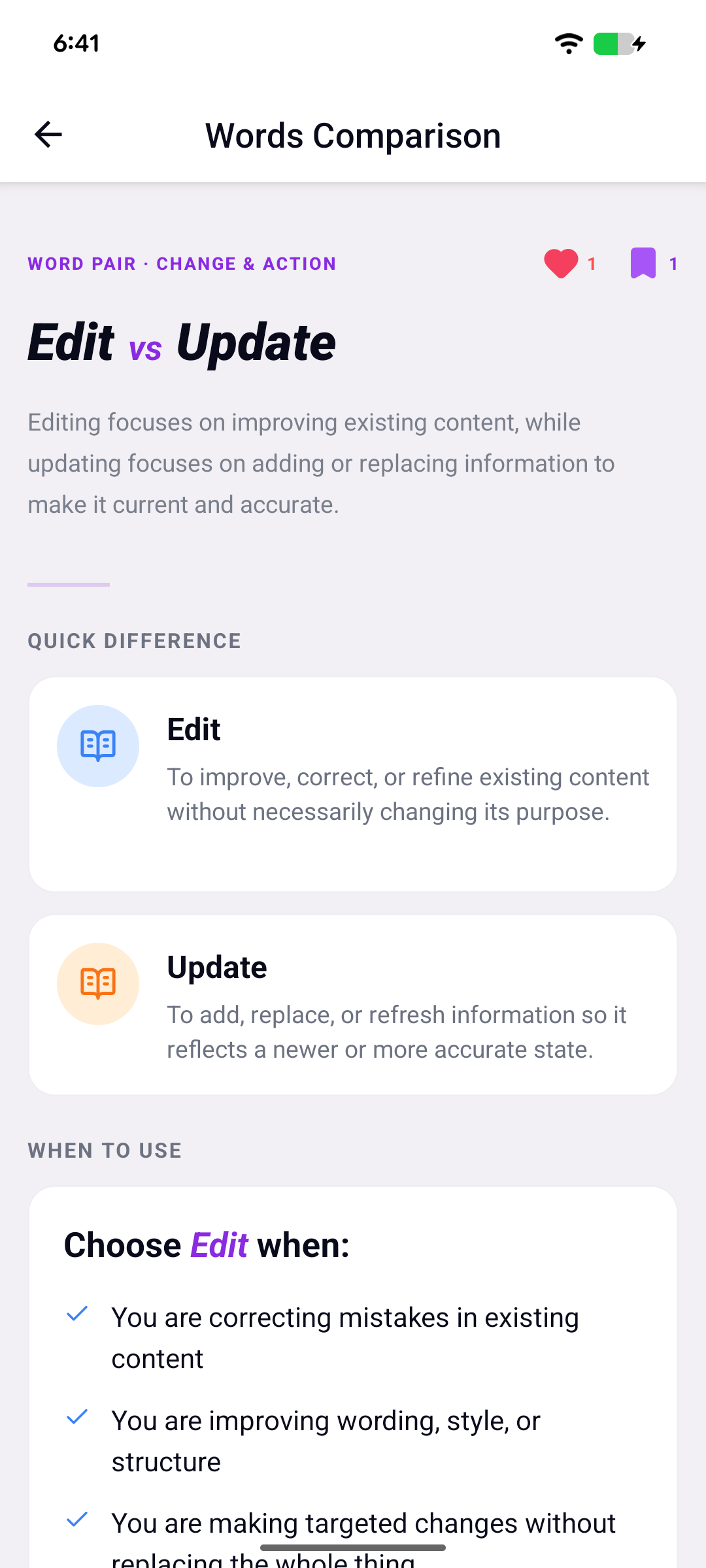
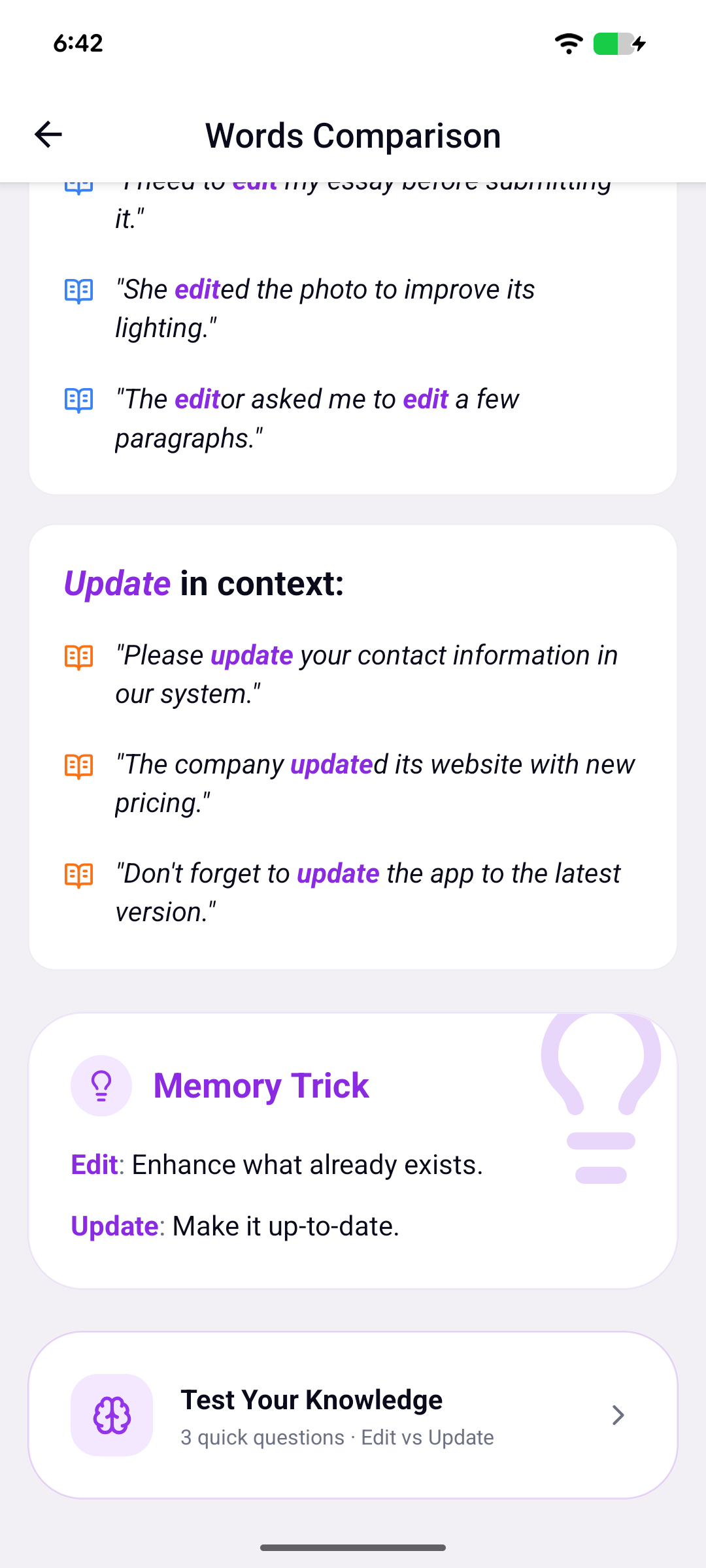
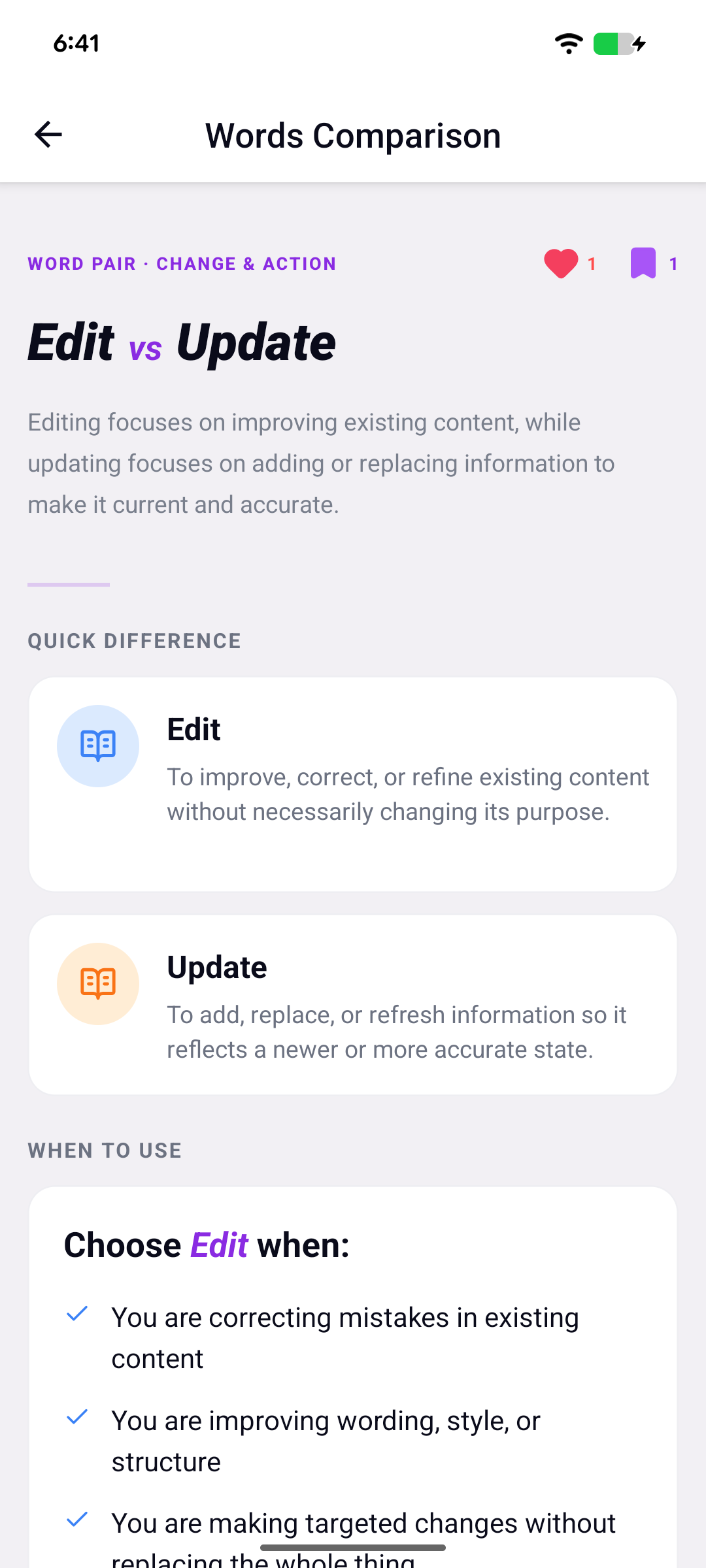
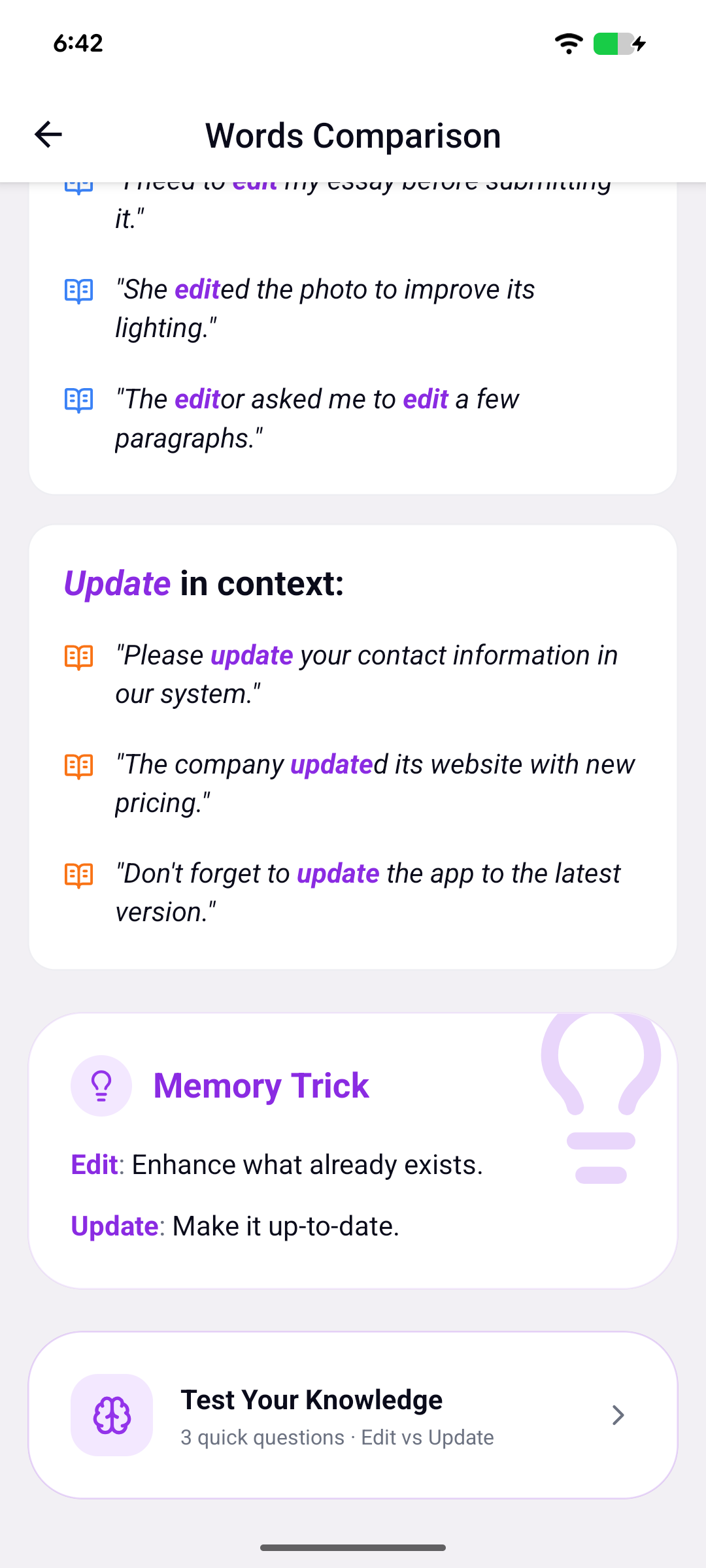
Each day brings two words you've been treating as the same — like alter and modify. We show you both, side by side.
Example
“The new rule will alter how requests are approved.”
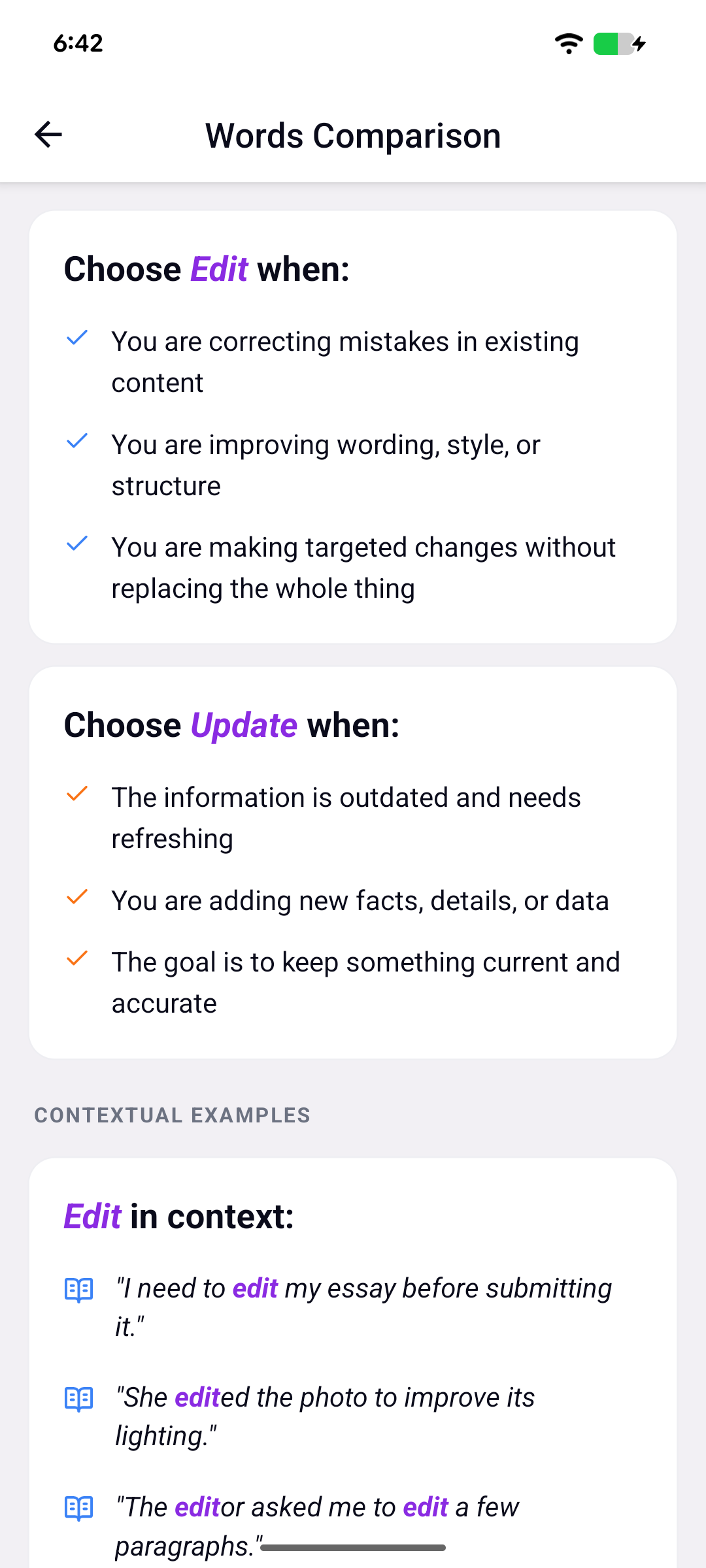
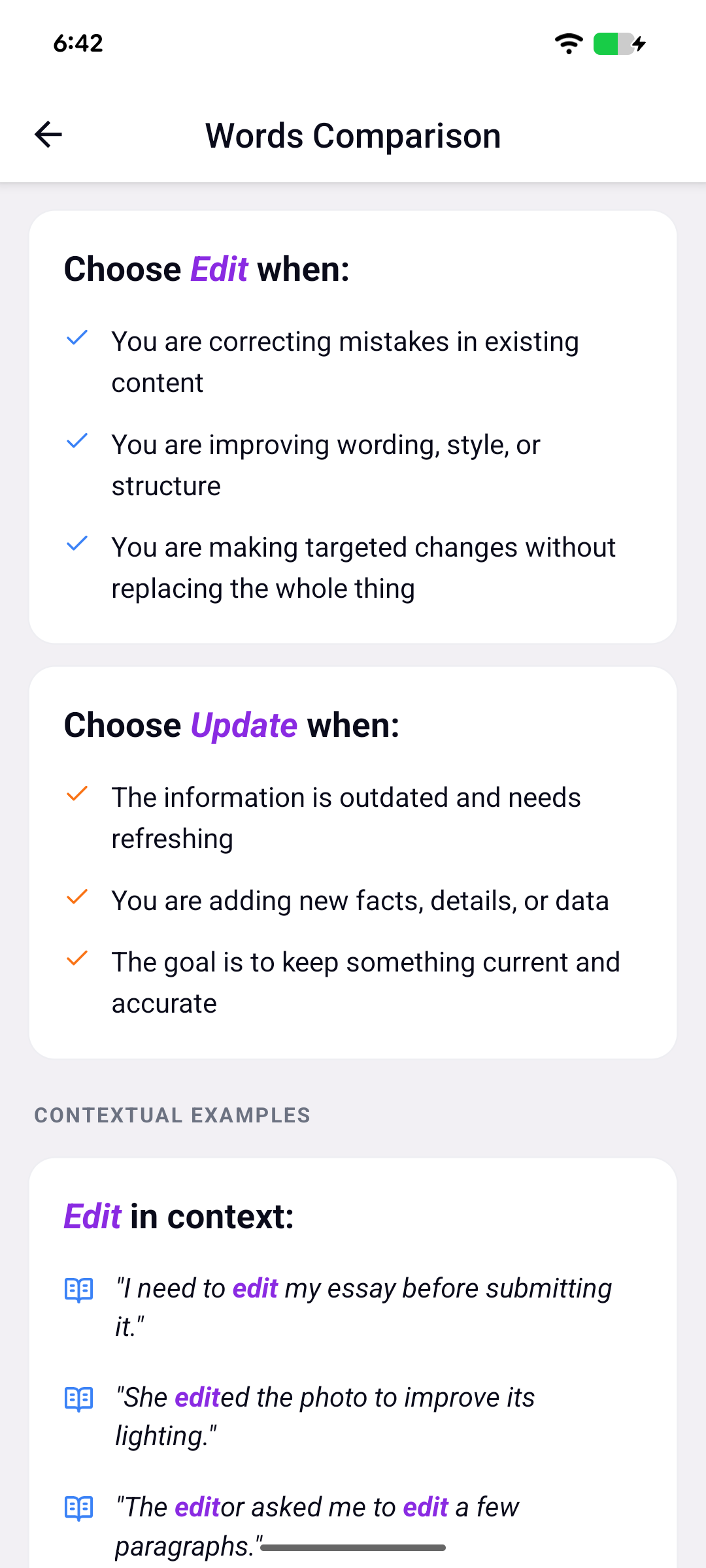
Real example sentences make the distinction click — not a dry definition, but the exact moment one word fits and the other doesn't.
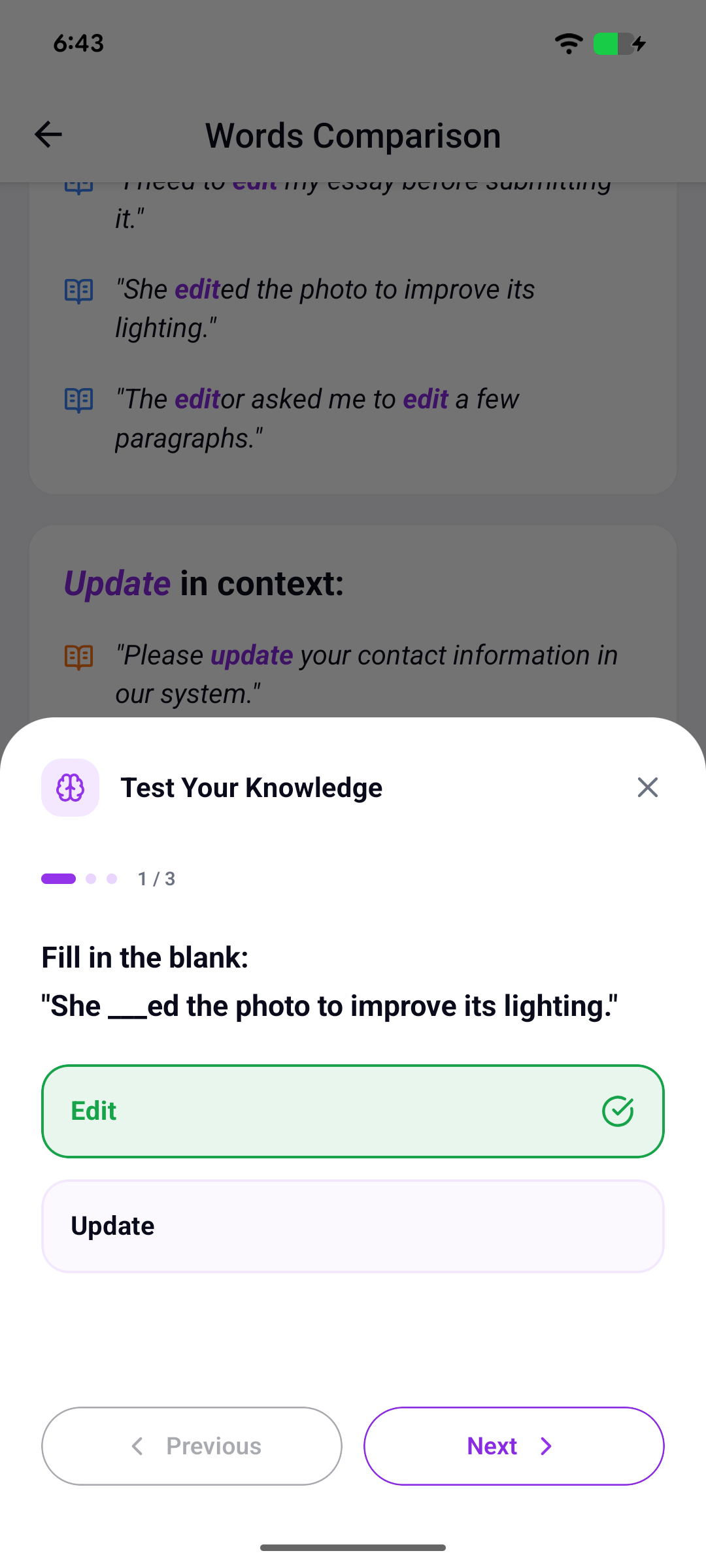
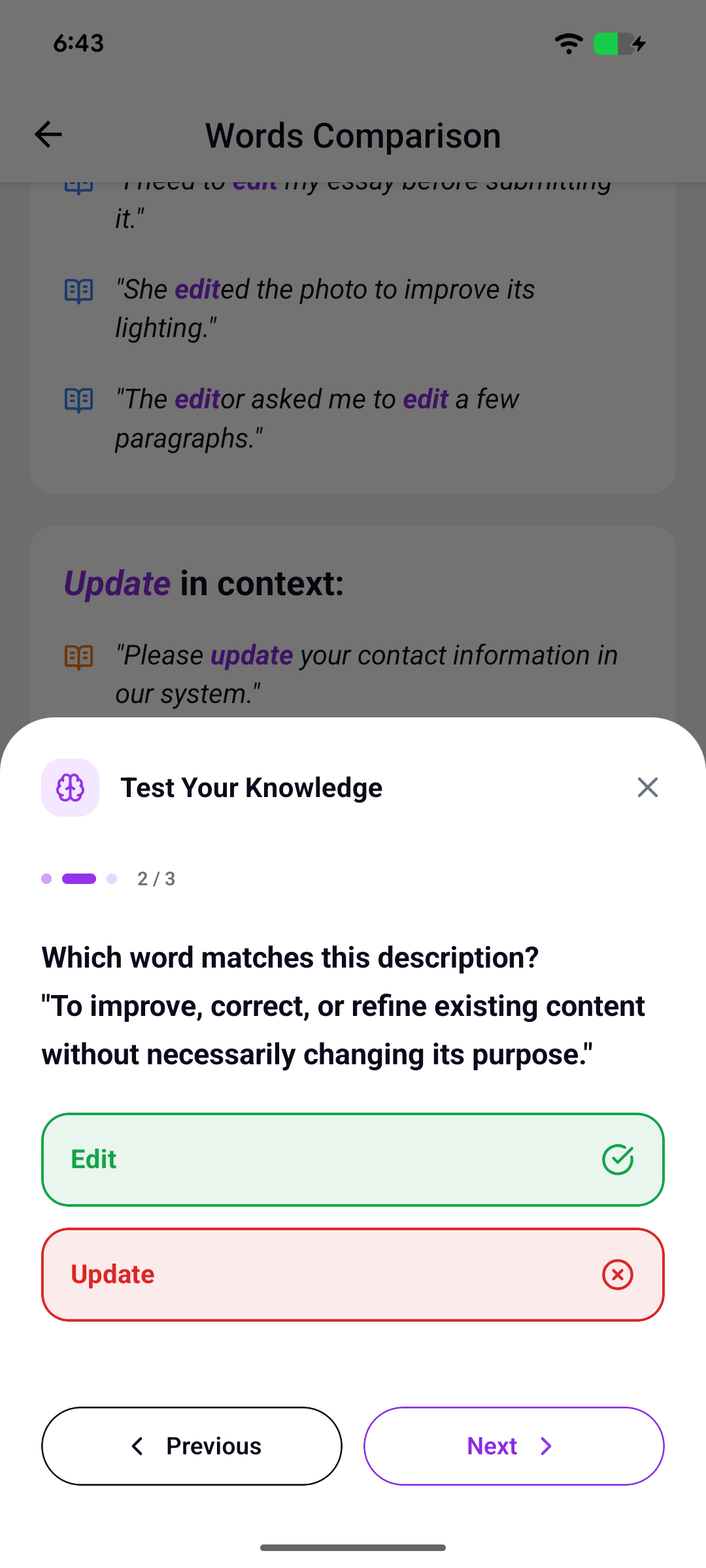
Which fits?
“The proposal will ___ the timeline.”
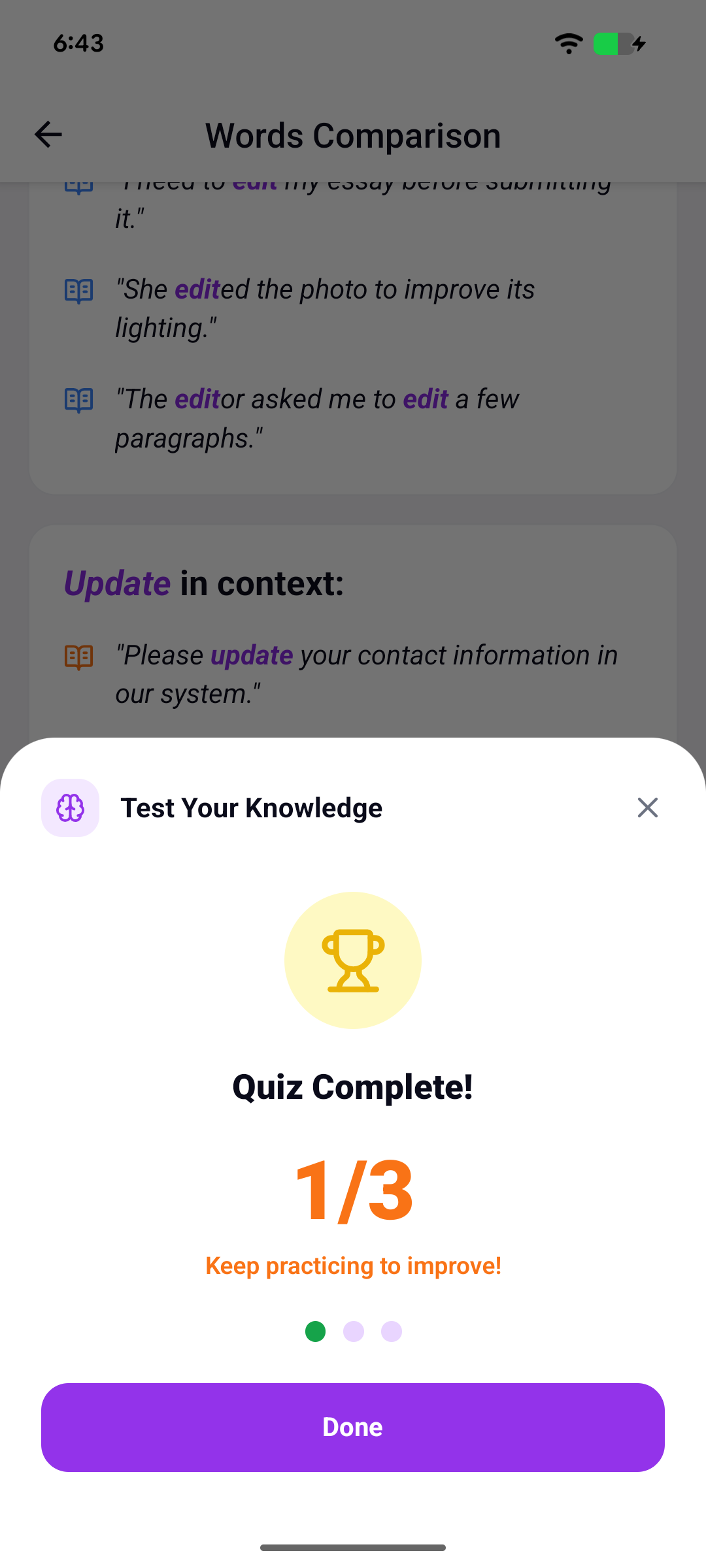
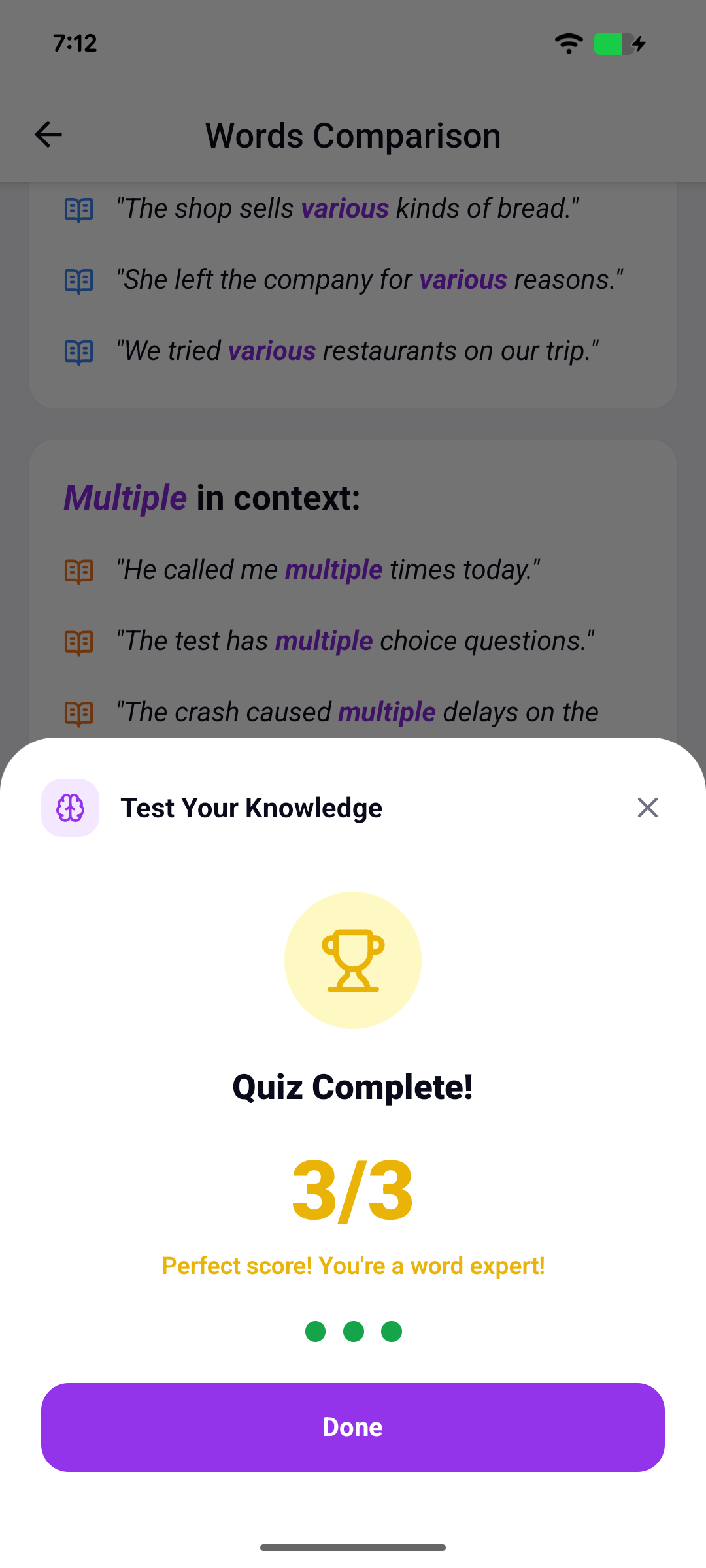
A quick check confirms you've got it. The pair moves from “almost know” to “know for good.”
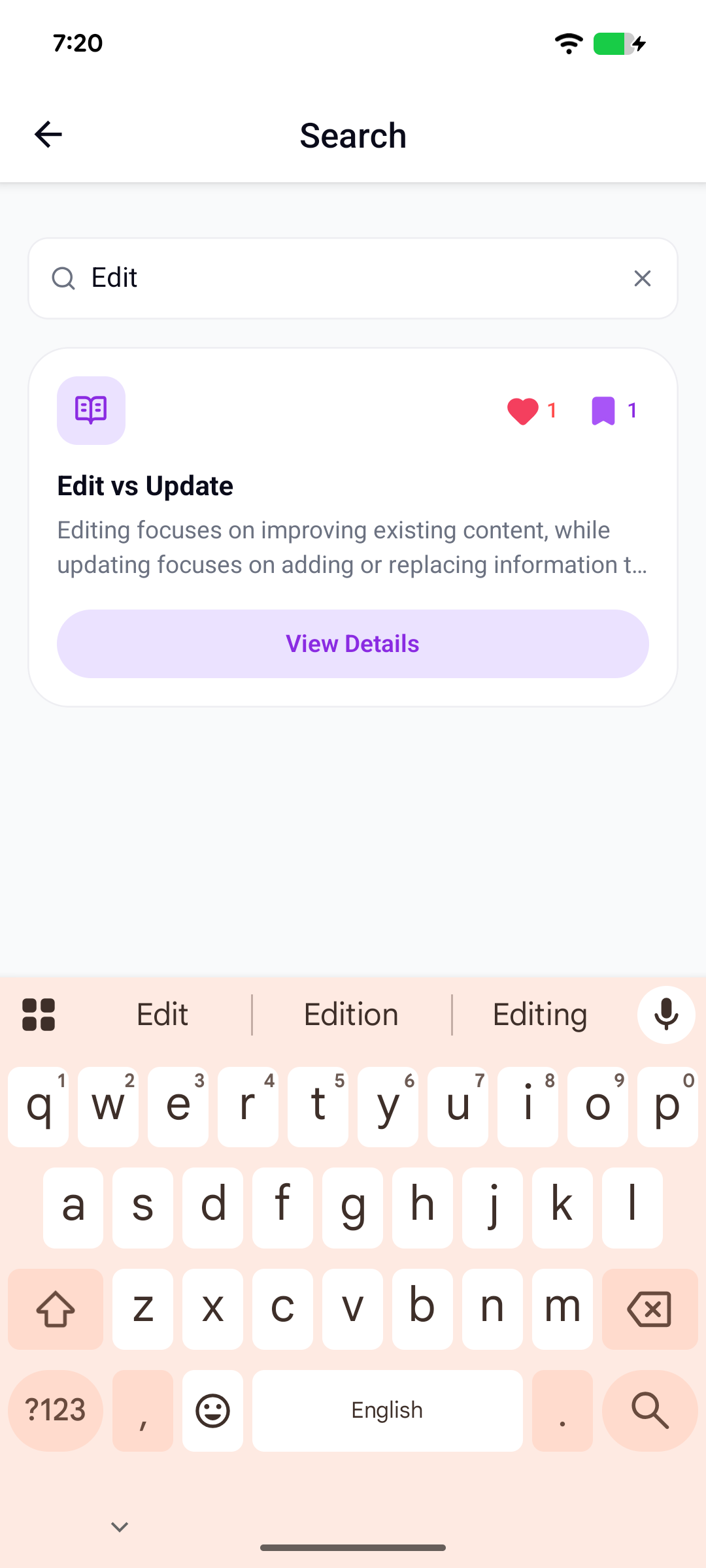
Most vocabulary apps teach you new words. We kept noticing a different problem: the words people already know, used almost right. Alter when they meant modify. Begin when start was sharper.
So we built the app we wanted one that makes those subtle differences finally click. We're early, and we'd love your feedback as we shape what Word Versus becomes.
— Abdullah R.